 Swift Ideas
AI strategy, audits & advisory
Where AI earns its cost, and where it does not.
Before you commit budget, we map where AI fits your product or operations, prove the strongest idea on your own data, and tell you what it will cost to run. For AI already in production, we audit quality, cost, data handling and failure modes, and hand you a written list of what to fix first. Sometimes the answer is that a rule or a form would do the job better, and we say so.
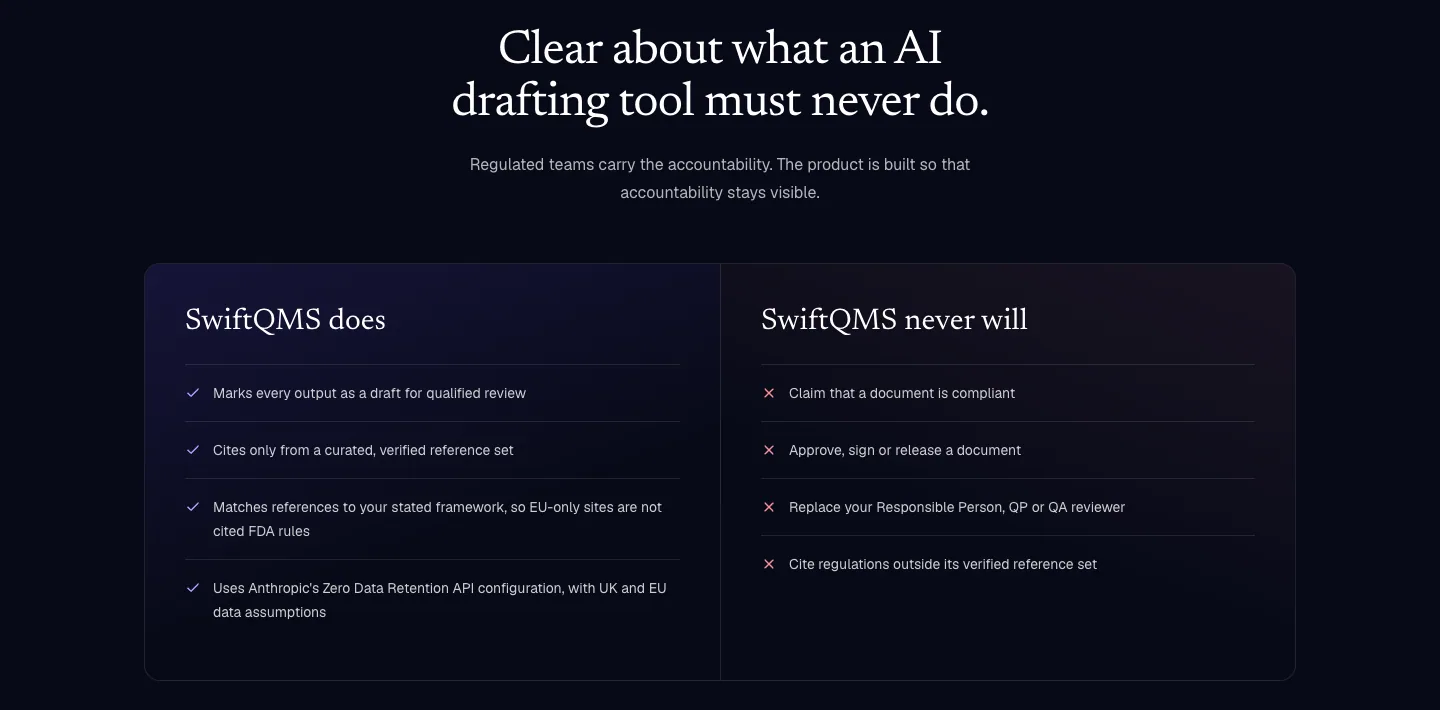
What clients arrive with
- The board wants an AI strategy and we do not know where to start.
- We shipped an AI feature and have no idea whether it is any good.
- Our model costs are growing faster than our usage.
- Vendors keep pitching us agents and we cannot tell which claims hold up.
- Our engineers use AI tools, but there is no shared way of working.
What you get
- An opportunity map
- Candidate uses of AI across your product and operations, ranked by value, feasibility, data readiness and risk, with the ones we would not build marked and explained.
- A feasibility spike
- The top candidate built as a working prototype on your real inputs, with accuracy and cost measured, so the build decision rests on evidence rather than a demo.
- An audit of AI in production
- Evals on a sample of real inputs, cost per call, prompt and provider review, data flows and retention, and the failure modes users actually hit, delivered as a written report in priority order.
- Model cost and provider review
- A benchmark of candidate models on your inputs, an escalation ladder so strong models are used only when needed, and a check that flags when a provider changes its prices.
- A data-handling review
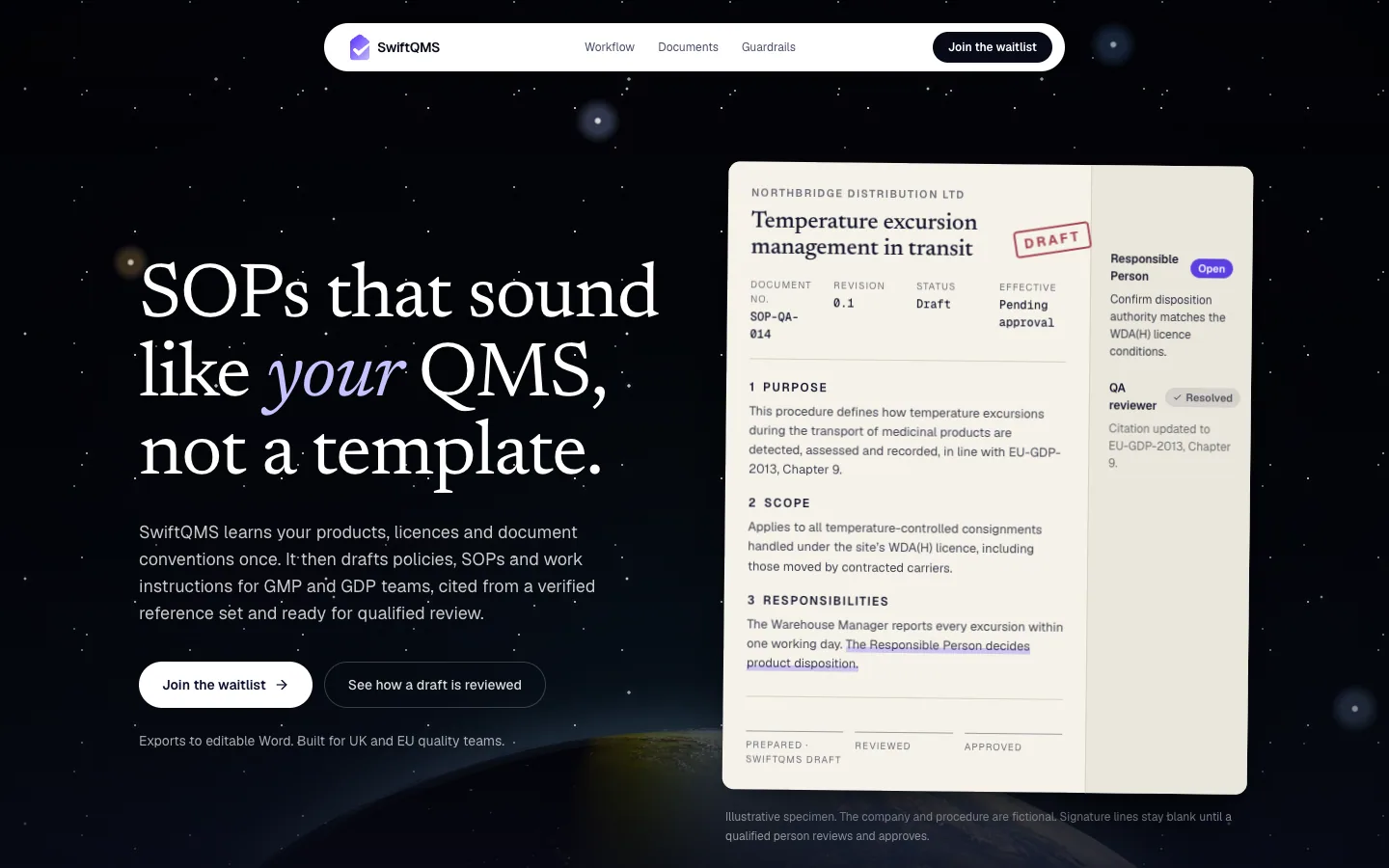
- Where inputs go, what the provider keeps, and whether access is enforced in the database or only in code. SwiftQMS, for example, is designed for Zero Data Retention and has row-level security on every table.
- An agentic engineering practice
- The way we work, set up for your team: written product and design docs as the contract, one instruction file shared by every coding agent, parallel worktrees and mandatory verification in a real browser.
How the work runs
Listen and read
Interviews with the people who own the problem, then the code, the data and the numbers. We form a view from what exists, not from the pitch deck.
Map and rank
Every candidate scored on the same criteria, including what it will cost to run a year from now, not only what it costs to build.
Prove the top one
A spike on your real data with accuracy and cost measured. If it fails, that is a result, and it cost you a spike rather than a project.
Recommend in writing
A short document: what to build, what not to build, in what order, and what each step should cost to build and to run.
How engagements start
- Fixed-scope audit or opportunity map, delivered as a written report and a working session to go through it.
- Feasibility spike before any build commitment, on your data, with a clear go or no-go.
- Retained advisory: a senior technical read on AI decisions as they come up, from the two founders directly.
Built with
Where each number comes from
Each figure names where it comes from.
- verified regulatory references the model may cite
- 26
- Source: SwiftQMS: counted in the reference list our Responsible Person maintains
- drafts per organisation per day, refused if usage cannot be checked
- 50
- Source: SwiftQMS: the limit set in the product's code
The work behind it
Questions, answered
Something else on your mind? hello@swiftideas.com
Do we actually need AI for this?
Sometimes not. If a validation rule, a better form or a scheduled job solves the problem more cheaply and more reliably, the recommendation will say so.
How do you choose between model providers?
By benchmarking candidate models on your own inputs for accuracy and cost. We have moved a production escalation step from one provider's model to a cheaper one on the strength of exactly that kind of benchmark.
What do we get at the end of an audit?
A written report ranked by impact, the eval set and scripts we used so you can re-run them, and a working session with your team to go through the findings.
Can you help our engineers work with AI coding tools?
Yes. We set up the practice we use ourselves, from instruction files and written specs to worktrees and browser verification, and pair with your engineers on real tickets until it sticks.
Is this only useful before we build?
No. Audits are often most valuable after launch, when real traffic has shown where quality, cost or latency has slipped.